


Power banks
How Many Phone Charges Are in a 10,000mAh Power Bank?
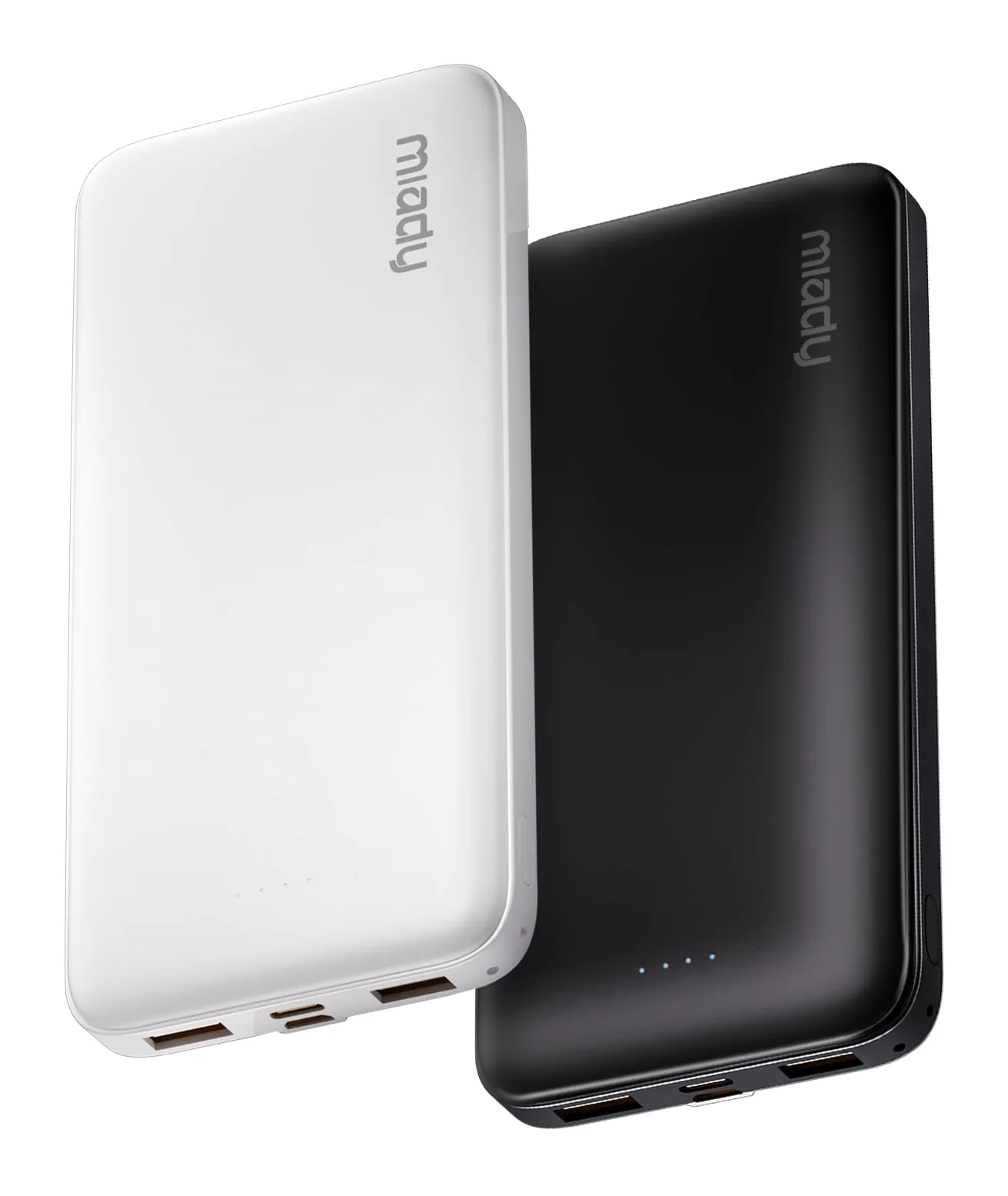
The label measures the bank, not your phone
A 10,000mAh power bank does not hold ten thousand of anything your phone can use directly. The figure on the case counts the charge stored in the bank's own cells, measured at the cells' own voltage. Your phone sees something different: power that has been pushed up to USB voltage, carried down a cable, and stepped back down to fill a battery of its own.
So the honest answer to the headline question starts with "roughly". A 10,000mAh bank gives a typical phone about one and a half full charges, and the exact figure moves with the phone, the cable, the room temperature and how hard the phone works while it charges. Nobody can promise a fixed count, and a bank that claims one is guessing on your behalf.
What you can do is understand the arithmetic well enough to predict your own result. It takes three numbers: the capacity of the bank, the size of your phone's battery, and a realistic share of energy lost on the way. Once you have those, picking between our 5,000, 10,000 and 20,000mAh models stops being a matter of taste and turns into a short sum you can do on the back of the box.
From mAh to watt-hours: the 3.7 volt sum
Milliamp-hours describe charge, not energy. Charge only becomes energy when you multiply it by voltage, and that is where watt-hours come in. Lithium cells of the kind inside a power bank have a nominal voltage of 3.7 volts, so the usual conversion goes like this: multiply the mAh figure by 3.7, then divide by 1,000.
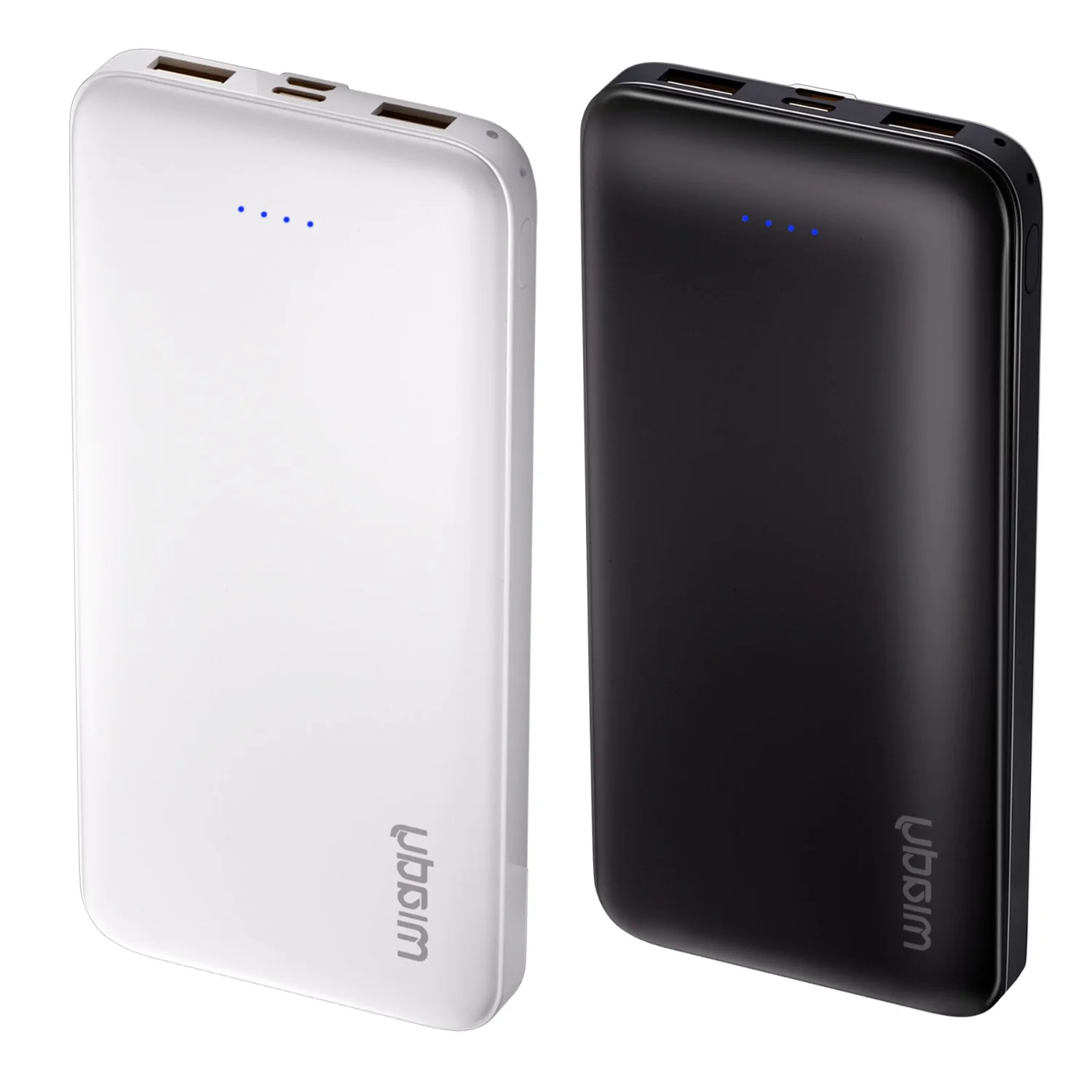
For a 10,000mAh bank, that gives 37 watt-hours. A 5,000mAh bank works out to 18.5 Wh, and a 20,000mAh bank to 74 Wh. These are the same figures printed on the spec sheets of our banks, and they matter for more than curiosity, because airlines draw their carry-on line in watt-hours, not in mAh.
Watt-hours also make comparisons fair. Two batteries with the same mAh number hold different amounts of energy if they run at different voltages. Phone batteries sit close to the bank's cell voltage, so comparing mAh to mAh gets you into the right neighborhood. But once you want an answer you can lean on, convert both sides to watt-hours and compare those. A 4,000mAh phone battery at 3.7 volts holds about 14.8 Wh, so a 37 Wh bank holds about two and a half times as much energy before any losses. The losses are what bring that down to one and a half.
Where the missing energy goes
A bank's cells deliver 3.7 volts, but USB starts at 5 volts and fast charging runs higher still. To get there, a small converter inside the bank raises the voltage, and every conversion turns part of the energy into heat. Inside the phone, a second circuit lowers the voltage again to fill its own cell, and that step costs a little more. Add the resistance of the cable, and the battery management that slows charging near full, and a slice of the label never reaches your phone.

How big is that slice? It varies, so treat any single number as an approximation. Many banks deliver around 60 to 70 percent of their label capacity when you measure it at the phone's battery voltage. A 10,000mAh bank, in other words, puts something like 6,000 to 7,000mAh into a phone. Faster output, such as the 22.5W on several of our 10,000mAh and 20,000mAh models, fills the phone sooner. It does not add capacity.
Your own habits move the result too. A phone that streams video during charging spends part of the incoming power right away, and that energy never lands in the battery. Cold weather lowers what lithium cells give up. A long, thin cable wastes more than a short, sturdy one. None of these are faults. They are the physics of moving energy from one battery to another.
How big is the battery in your phone?
Most current phones carry batteries of roughly 3,000 to 5,000mAh. Compact models and older handsets sit toward the bottom of that range, and large-screen phones toward the top. The manufacturer usually publishes the figure on its spec page, sometimes in watt-hours rather than mAh, and that one number does more for your estimate than any marketing claim on a power bank box.
Once you know it, the sum is quick. Take the bank's capacity, multiply by a share between 0.6 and 0.7, and divide by your phone's battery size. A 10,000mAh bank and a 3,000mAh phone give roughly two full charges. The same bank and a 5,000mAh phone give a little more than one. That spread is why two people with the same bank report different counts and are both telling the truth.
Tablets, earbuds and watches change the picture. A tablet battery can be two or three times the size of a phone's, so a 10,000mAh bank may cover well under one tablet charge. Earbuds, at the other end, use so little that a bank refills their case many times over. If you charge a mix of devices, our slim 10,000mAh model handles three at once, which is useful at the end of a long day when everything runs low together.
There is also a home test that beats any spec sheet. Charge the bank to full, run your phone down to about 20 percent, then plug it in and note where the phone stops climbing and how far the bank's charge indicator dropped. Repeat until the bank is empty and add up the percentage points your phone gained. Divide by 100 and you have your own count of full charges, measured with your cable, your phone and your habits. Run it twice and expect two slightly different answers, which is the range at work.
Rough charges by capacity
Put the three capacities we make next to a mid-size phone and the guesswork shrinks to a short range. Watt-hours come straight from the 3.7 volt sum, and the charge count applies the 60 to 70 percent share that survives conversion, heat and cable.
| Capacity | Watt-hours | Rough full charges of a 4,000mAh phone |
|---|---|---|
| 5,000mAh | 18.5 Wh | about 0.75 to 0.9 |
| 10,000mAh | 37 Wh | about 1.5 to 1.75 |
| 20,000mAh | 74 Wh | about 3 to 3.5 |
These figures assume a phone with a 4,000mAh battery charged from empty to full with the screen off, at room temperature, and a bank that delivers 60 to 70 percent of its label to the phone.
Read the right column as a range, not a promise. A 5,000mAh bank will not quite fill a 4,000mAh phone from zero, but it will take one from a worrying 15 percent to most of a full battery, and that is usually the job it is bought for. At the far end, a 20,000mAh bank covers a weekend for one phone or a long day for two.
If your phone is smaller or larger than 4,000mAh, scale the column. A 3,000mAh phone gets about a third more charges from each bank, and a 5,000mAh phone about a fifth fewer. The arithmetic is the same either way.
Choosing between 5,000, 10,000 and 20,000mAh
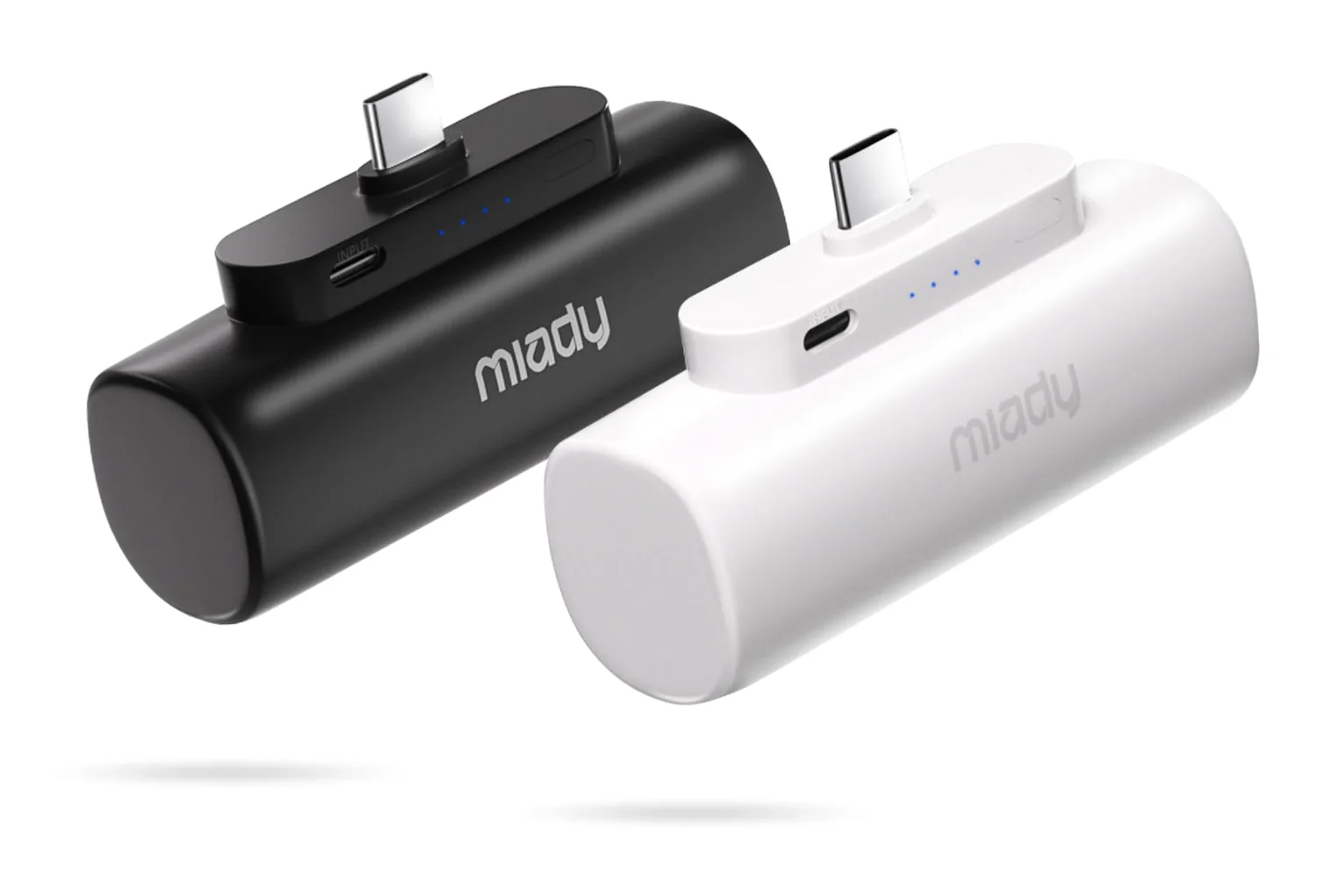
Start with the gap you need to cover. A 5,000mAh bank tops up a phone that would otherwise die before you get home, and it barely registers in a pocket: our flat 5,000mAh model measures 3.6 by 2.5 by 0.4 inches. The mini power banks in our range go one step further and plug straight into the phone through a built-in USB-C or Lightning connector, so there is no cable to forget.
Ten thousand mAh is the middle size most people end up carrying every day. It covers a full day of heavy use with something to spare, and the Miady slim 10000mAh power bank keeps that capacity to 5.5 by 2.6 by 0.6 inches and under eight ounces. The same USB-C port charges your phone and recharges the bank, so one cable does both jobs.
Magnetic banks follow the same arithmetic with one extra loss. When a bank snaps onto the back of a MagSafe phone or a magnetic case and charges without a cable, the wireless link wastes more energy as heat than a wire does. A magnetic 5,000mAh bank is best treated as a top-up. Our magnetic 10,000mAh 22.5W model also has a USB-C port, and plugging in a cable gets you closer to the figures in the table.
Twenty thousand mAh earns its weight on trips, at campsites and through power cuts, when no wall outlet is coming for a day or more. It is also the size to choose if one bank has to serve a phone and a tablet. Our 20000mAh power banks run to 74 Wh, which still sits under the 100 Wh line airlines use for carry-on batteries. One of them adds a solar panel that recharges the bank slowly in daylight, a help when the trip runs longer than the battery.
Why so many of our banks come in pairs
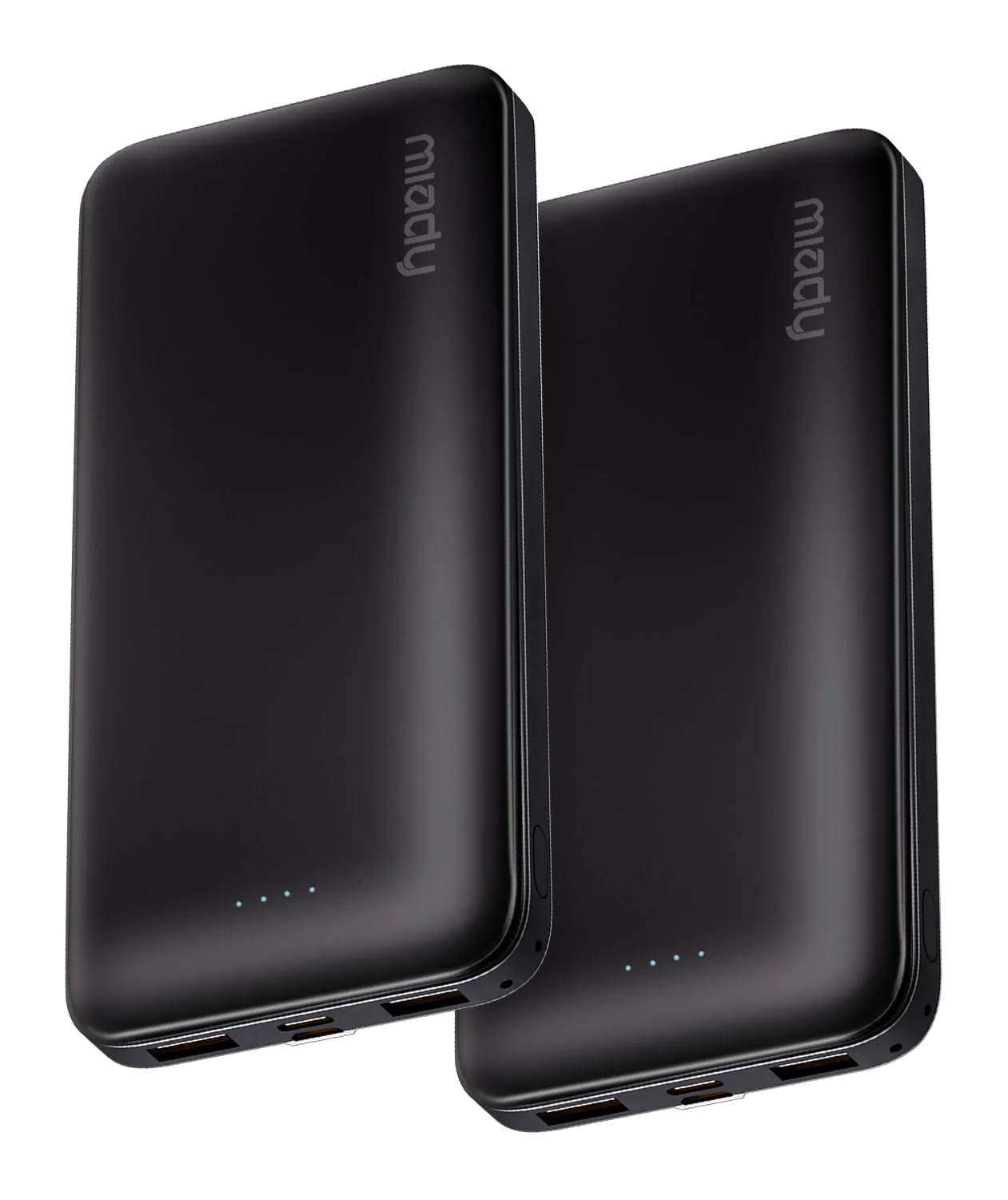
Look through our chargers and you will notice that most of our 5,000mAh and 10,000mAh models come as a 2-pack. The reason is practical. A single bank is either in your bag or on the charger, rarely both. With two, one charges at home while the other rides along, and you swap them at the door.
Pairs also settle the household question of whose bank it is. Two people leaving the house each take one, and nobody runs a shared bank flat before the other gets a turn. Several pairs come in two contrasting colors, so each bank has an owner at a glance.
There is an arithmetic argument as well. Two 10,000mAh banks hold the same 74 Wh in total as one 20,000mAh bank, but they can charge two phones at full speed in two different places. If you rarely need the whole 74 Wh at once, the split version gives you more flexibility for the same energy. When you do need it all in one place, for a camping weekend or an outage, the two halves still add up.
A few habits stretch every charge, whichever size you carry:
- Charge with the screen off and the phone idle.
- Use a short cable in good condition.
- Keep the bank out of hot cars and freezing pockets.
- Recharge the bank soon after it runs low, so it is ready the next time you reach for it.

