


Travel
Flying With a Power Bank: Carry-On Rules and Watt-Hours
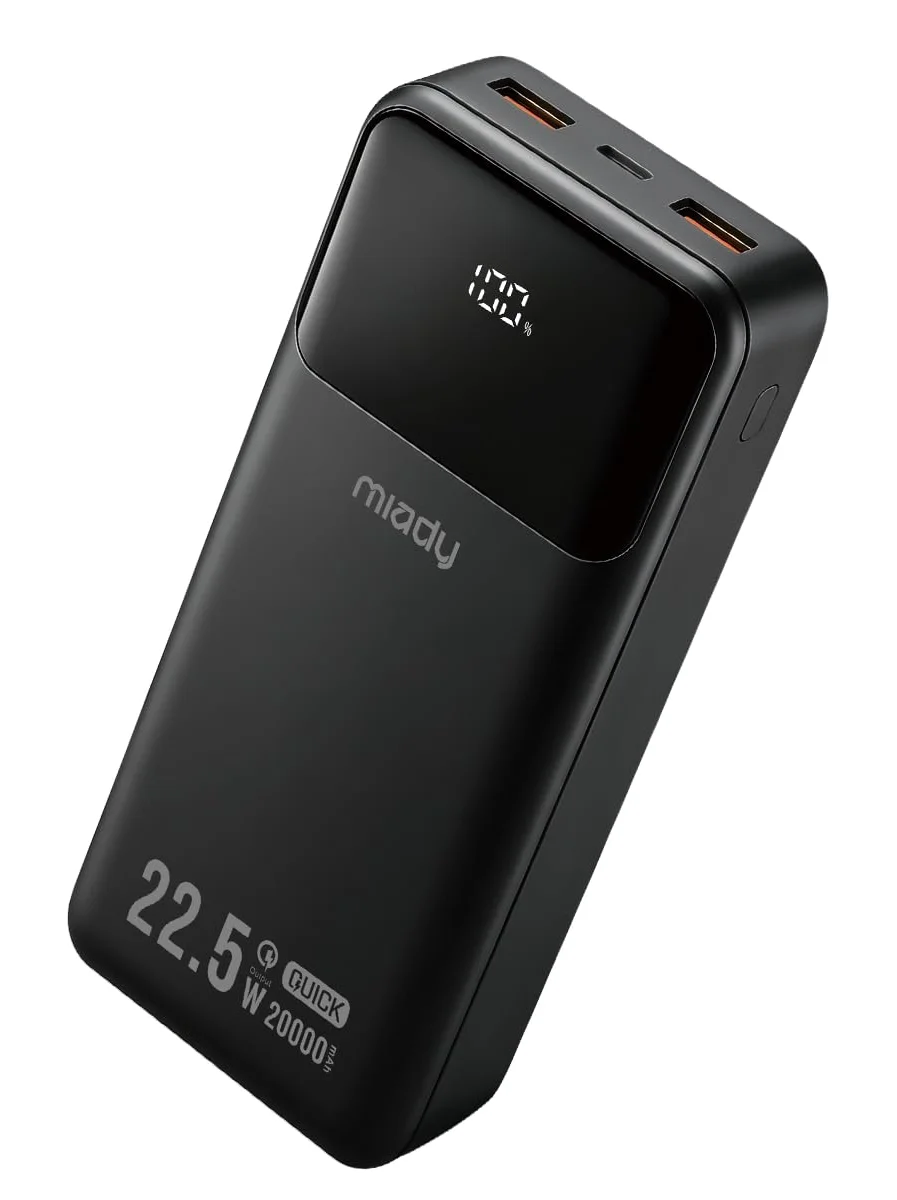
Power banks fly in the cabin, never in the hold
The first rule is the one people get wrong at the check-in desk. A power bank is a spare lithium battery, and spare lithium batteries belong in your carry-on bag, not in a suitcase that goes under the plane. The FAA states this plainly for US flights, and airlines around the world follow the same idea.
That rule has a practical reason, not a bureaucratic one. A battery that overheats in the cabin is next to people who can see it, smell it and reach it, and the crew is trained to deal with it. The same battery buried in a checked bag sits in a hold where nobody would notice until much later. Keeping power banks within reach turns a rare problem into a manageable one.
So before you zip the big suitcase, take every power bank out of it. That includes the slim one tucked into a jacket pocket, the mini bank clipped to a key ring and the solar bank packed with the camping gear. If you travel with a pair of our banks, both halves go in the cabin. Phones, laptops and cameras with their batteries installed follow their own rules, but the loose battery pack you charge them from always rides with you.
The 100 watt-hour line and what sits above it
Airlines sort spare lithium batteries by energy, measured in watt-hours. The figure that matters most is 100. A power bank at or under 100 Wh goes in your carry-on without special permission on most flights, and that covers the great majority of phone power banks sold today.
Above that, the FAA sets a second band. Batteries between 101 and 160 Wh need approval from the airline before you board, and some airlines limit how many of them each passenger may carry. Anything larger than 160 Wh is not a carry-on item at all. These bigger batteries tend to be laptop power stations and camera packs rather than phone banks, but they explain why the number on your bank matters.
The line applies to each battery on its own. Two 74 Wh banks do not add up to one 148 Wh bank in the eyes of the rule, because each one is a separate battery. Airlines may still cap the total number of spares per passenger, and some set limits stricter than the FAA's. The rule you fly under is the one printed in your airline's own baggage policy, so read it before the trip, especially on international routes or small regional carriers.
Reading the watt-hours on your bank
Most power banks print their watt-hours on the case, usually in small type near the capacity in mAh and the input and output ratings. Look for a figure followed by "Wh". If you find it, you are done: compare it with 100 and you know which band you are in.

Older or smaller banks sometimes show only mAh. In that case, work it out yourself with the standard sum for lithium cells. Multiply the mAh figure by 3.7, which is the nominal voltage of the cells, then divide by 1,000. A 10,000mAh bank comes to 37 Wh. Double the capacity and the result doubles: 74 Wh for 20,000mAh. Run the sum the other way and you find that the 100 Wh line sits at roughly 27,000mAh. Phone banks rarely come close to it.
Keep the answer handy at the airport. A security officer who has to guess the capacity of an unlabeled battery may decide to keep it, and a clear figure on the case or a spec sheet on your phone ends that conversation quickly. If the printing on your bank has worn off after years in a pocket, a photo of the original box or the product page does the same job. On our product pages, the watt-hours sit right next to the capacity.
Where every Miady bank lands
We make power banks in three capacities, and the largest of them stops at 20,000mAh. That puts every Miady bank well below the 100 Wh line, with room to spare even at the top of the range.
| Miady capacity | Watt-hours | Carry-on under the 100 Wh line? |
|---|---|---|
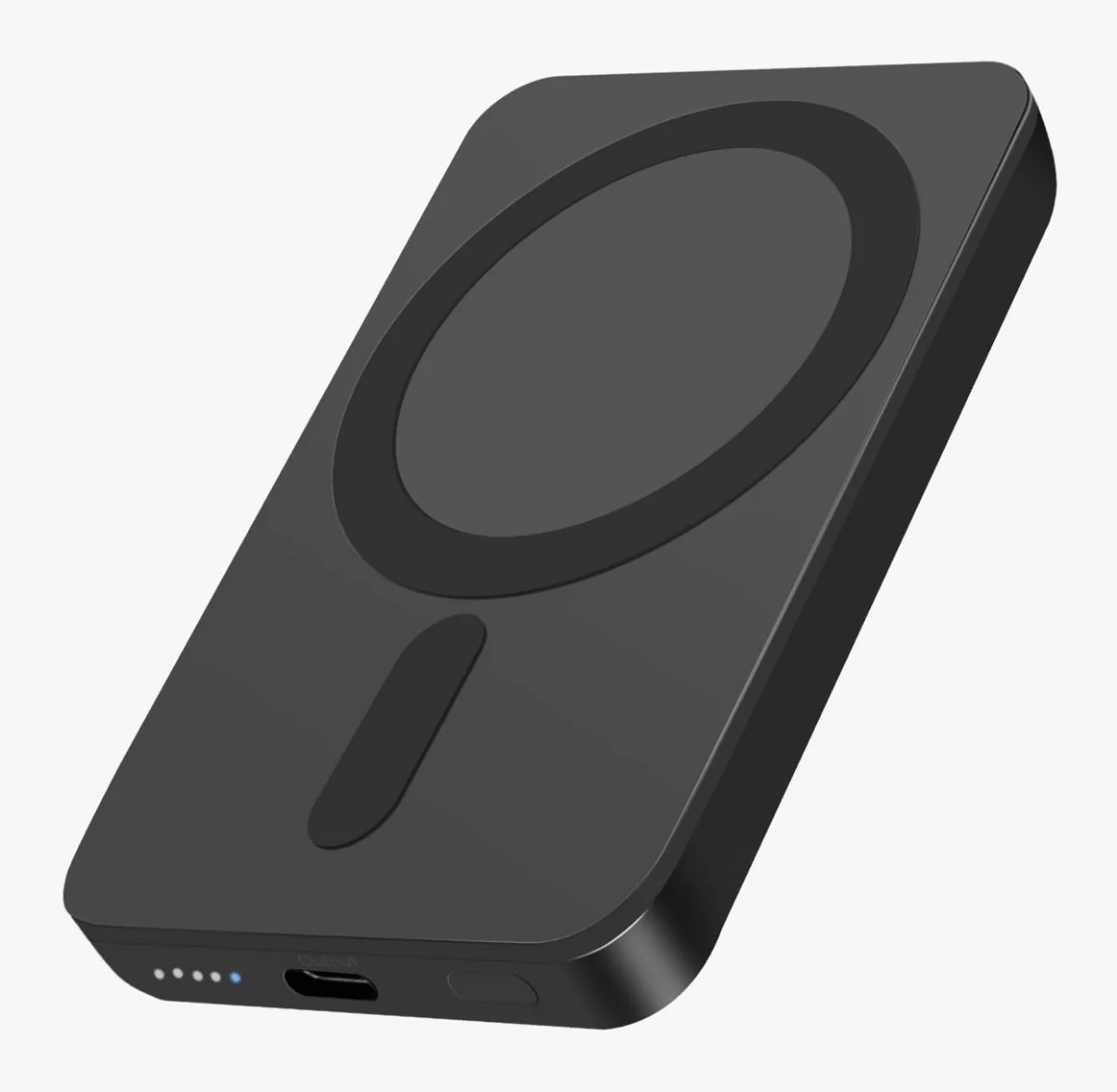
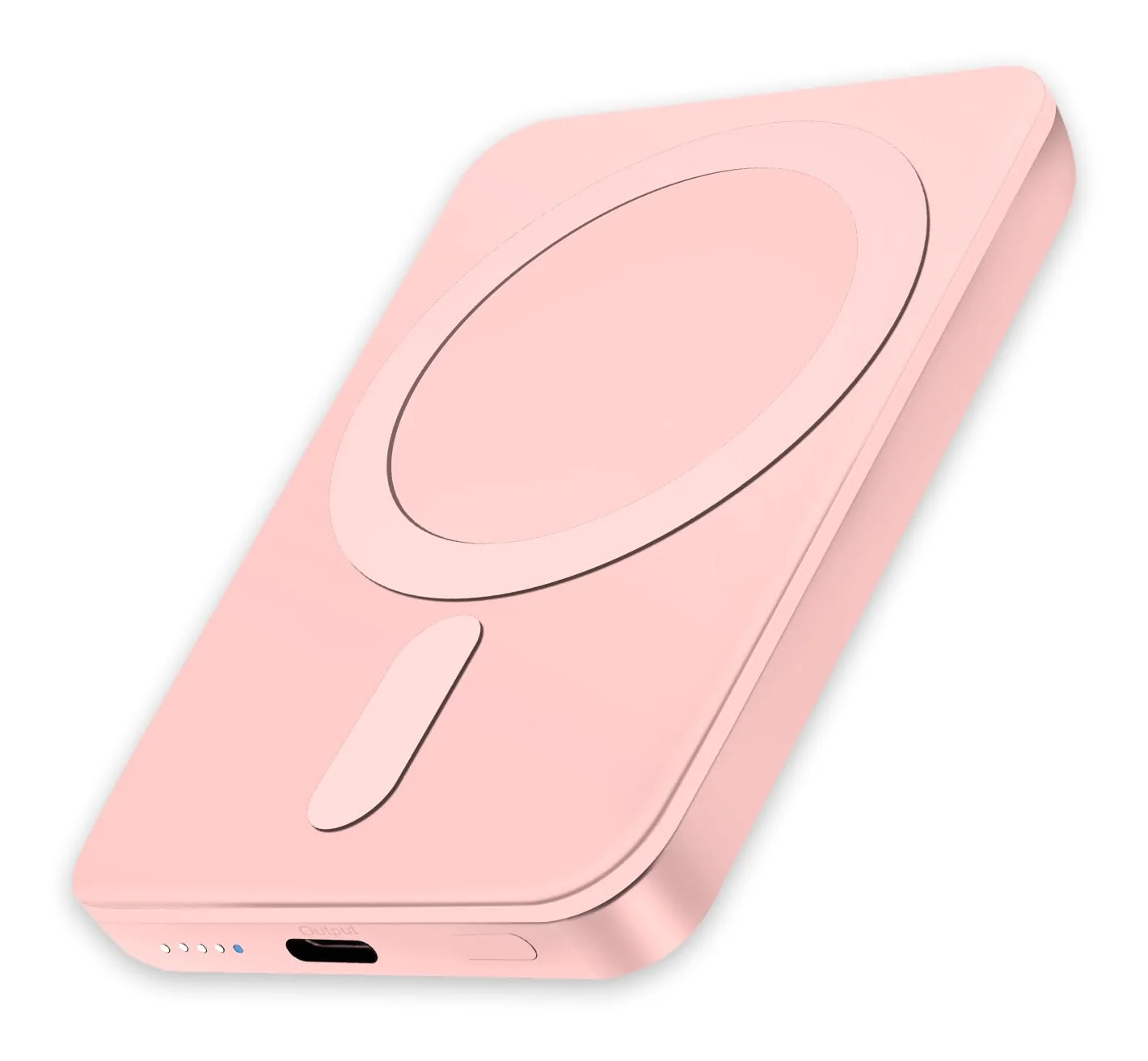
| 5,000mAh (mini, magnetic, built-in plug) | 18.5 Wh | Yes, far below it |
| 10,000mAh (slim, 22.5W, magnetic, solar) | 37 Wh | Yes, far below it |
| 20,000mAh (travel, display, solar) | 74 Wh | Yes, 26 Wh below it |
The watt-hours come from the usual 3.7 volt cell arithmetic and match the figures on our product pages.
A pair of 20,000mAh banks, such as our travel 2-pack, gives you two batteries of 74 Wh each, and each one is judged on its own. Mixed bulk packs follow the same logic: every bank in the box is a separate battery under the line. What can trip you up is quantity, not size, if your airline limits how many spares one passenger brings. A family sharing one carry-on is a common way to reach that limit without meaning to, so split the banks between bags.
For longer trips, the Miady 20000mAh power banks carry the most energy in our range while staying under the line. If you are still choosing, the power bank buying guide walks through size, weight and output side by side.
Packing so nothing touches the ports
A power bank in a carry-on still needs some care. The risk the FAA describes is a short circuit: metal such as keys, coins or a loose cable end touching the terminals and letting current flow where it should not. Prevention is simple. Give each bank its own pocket, pouch or small bag, and keep loose metal away from it.
Covering the ports helps too. A bit of tape over an open USB port, or the cap that came with a bank, keeps crumbs and coins out. Mini banks with a built-in USB-C or Lightning plug deserve extra attention, because the plug sticks out and can catch on other items. Fold it in if it folds, cap it if it came with a cap, and keep it pointed away from anything metal.
Damage matters as much as contact. A bank that has been dropped hard, crushed under a heavy bag or swollen out of shape should stay at home. The same goes for a bank that runs unusually hot while charging. Pack banks where they will not be sat on or squeezed, and keep them out of the seat pocket, where they are easy to forget and easy to bend when the seat in front reclines.
Gate checks, in-flight charging and heat
Full flights often end with an announcement asking passengers to check carry-on bags at the gate. If your bag goes, take every power bank out first and keep it with you in the cabin. A gate-checked bag ends up in the hold just like a suitcase, and the battery rules follow the battery, not the bag.
Using a power bank during the flight is a separate question. Some airlines now ask passengers not to charge devices from power banks in the air, or not to charge the power bank itself from the seat outlet. Others still allow both. The cabin announcement and your airline's policy decide, so listen for it and follow it, even if the previous flight allowed something different.
Keep the bank where you can see it if you do use it. A bank tucked under a blanket or buried in a backpack can warm up without anyone noticing. If a bank gets hot, starts to swell, smells of burning or gives off smoke, stop using it and tell a flight attendant at once. Leave the handling to the crew, and the sooner they know, the simpler their job is.
Abroad, on connections and with small carriers
The 100 and 160 Wh lines are not a US quirk. Aviation regulators in many countries use the same thresholds, so a bank that clears security in Denver usually clears it in Lisbon as well. The details around those lines are where airlines and countries part ways, and a trip with two or three carriers can put you under several sets of rules in one day.
When a journey combines airlines, plan around the strictest one on the ticket. A limit of two spare batteries on the second leg applies even if the first airline let you carry four. Small regional carriers and charter flights sometimes publish tighter policies than the large airlines, and their staff apply them at the gate, where there is little time to argue.
Some airlines also refuse power banks whose capacity is not printed on the case, or whose marking has rubbed off. A bank with a clear mAh or Wh figure avoids that problem before it starts. If you are flying somewhere for the first time, look up the battery section of each airline's baggage policy along with the visa and luggage rules. Ten minutes of reading at home costs far less than leaving a bank in a bin at a foreign checkpoint, and it tells you whether to pack one bank or two.
Picking a bank for the trip
Choose the bank for the journey, not just for the flight. A day of travel with a phone used for boarding passes, maps and messages drains it faster than an ordinary day, so a 10,000mAh bank is a comfortable default for one traveler. Our slim model sits flat in a jacket pocket and charges up to three devices at once, which helps when the phone, the earbuds and a tablet all run low at the same layover.
Families and longer trips push the numbers up. Two 10,000mAh banks give two people their own supply without arguing over one cable, and a 20,000mAh bank covers a long weekend for one phone or a tablet and a phone together. A solar 20,000mAh bank tops itself up slowly from its own panel, a help on a camping trip at the far end of the flight, though for faster recharging you will still want USB-C and an outlet.
Before you leave, charge every bank you plan to carry and confirm its capacity on the case. Put each one in its own pocket of your carry-on, away from keys and coins. Then read the battery section of your airline's baggage policy one last time, because that page, not any general guide, is the rule your flight runs on.

